


Table of Contents
-
Introduction
-
Why does understanding the roof parts matter?
-
What are the parts of a house roof called?
-
What are the parts of a metal roof called?
-
What are the parts of a roof truss called?
-
How do all roof components work together?
-
Why does quality material matter for roofing installations in Maryland?
-
Conclusion
Introduction
A roof is not just a structure made of shingles or metal panels but a proper system made up of multiple components like framework, covering layers, and a drainage system that collectively make a roof. They work together to protect the interior of the house from weather, moisture, and temperature changes. There are some specific terms that are used for different parts of the roof, and it’s important for homeowners to understand them. Learn about the terminology: parts of a roof in this blog and their purposes.
Why does understanding the roof parts matter?
Understanding about the roof parts for homeowners is important because then they can effectively communicate to roofing contractors. That helps them in recognizing the issues earlier, which saves their valuable roofs from excessive damage and gets them the best solution. Also, it improves the planning and discussion with contractors about roofing material and construction. At Bawa GC we not only provide construction services, but we also focus on making the public aware of home renovations, as it provides them a better understanding of how a roofing system protects a home.
What are the parts of a house roof called?
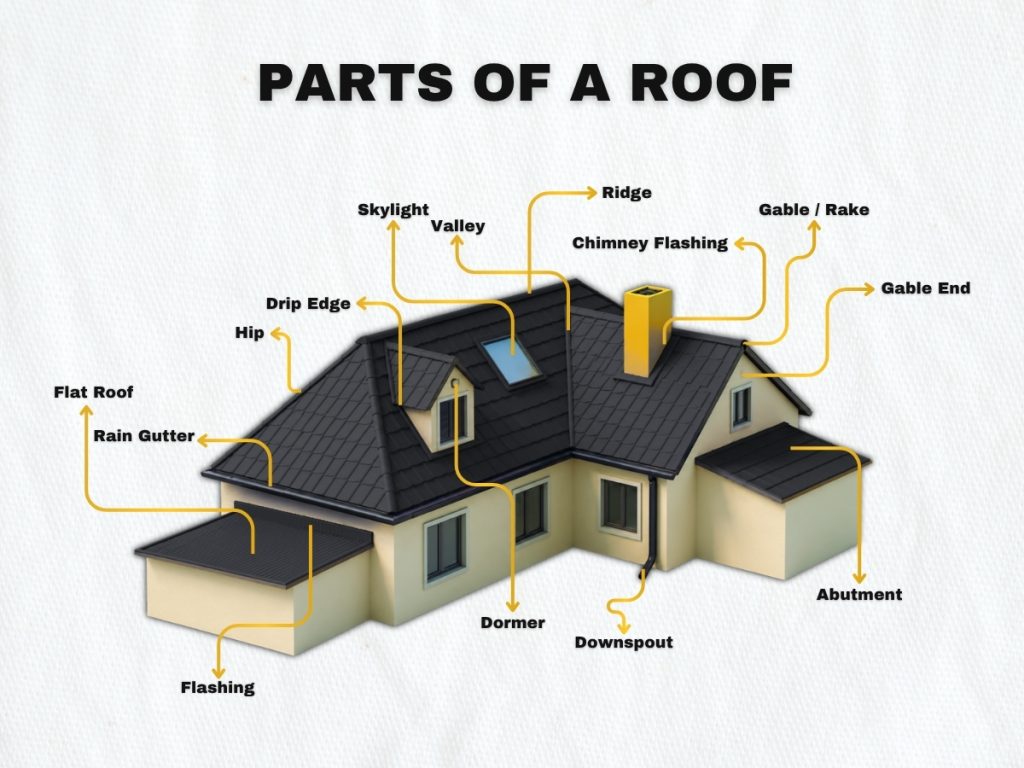
Below are the major structural parts of a house roof that a homeowner must know. It also helps you understand the framework of a roof.
Roof Layers: Foremost comes the roof deck, which is the foundation of the roofing system and is typically made of plywood or oriented strand board (OSB). The roofing materials are installed directly onto the deck, and it provides structural support for the entire roof assembly. Then comes the underlayment, which is a protective layer installed between the roof deck and the roof covering. It helps in preventing moisture entry and acts as an additional level of protection during severe weather conditions. It plays an important role in extending the lifespan of the roof.
The outermost layer of the roof designed to protect against the elements is called roof covering, and it includes asphalt shingles, metal panels, tiles, slate, or other roofing materials. It serves as the primary barrier against rain, snow, and sunlight.
Roof Structural Components: It consists of ridge, hip, valleys, and eaves. The ridge is the most elevated horizontal point where two roof slopes meet. It helps create a finished appearance and supports roof ventilation systems. The hip is the external angle formed when two roof sections meet. Commonly found on hip-style roofs, as it contributes to the overall stability of the roof structure.
The Valley is The internal angle where two roof slopes intersect and it Directs rainwater toward gutters and drainage systems; it also requires proper installation to prevent leaks and water accumulation. Here, Bawa General Contracting provides effortless installation of critical components of a roof structure. Then the eaves are the edges of the roof that extend beyond the exterior walls and help in directing water away from the home’s foundation. It provides shade and protection for windows and siding.
Roof Edge Components: It consists of fascia and soffit. The fascia is a horizontal board that is attached at the lower edge of a roof and supports gutters and also provides a finished appearance. Soffit is the underside of the roof overhang located beneath the eaves that contains the ventilation openings, which improve attic airflow and moisture control.
What are the parts of a metal roof called?
Metal Panels: They are the visible roof material that covers the roof surface, which is available in numerous options, and these are designed to cater to harsh weather conditions.
Standing seams: These are the raised vertical joints connecting metal panels, which helps in preventing water infiltration. Also, create a sleek and modern appearance for the homes.
Closure Strips: These are the specialized components used to seal gaps beneath metal roofing panels. It helps in keeping out moisture, insects, and debris; also, it improves overall weather resistance from the exterior of the house.
What are the parts of a roof truss called?
Roof trusses consist of interconnected triangular components, which are mentioned below. Every homeowner should know about it; it helps them in communicating better during home remodeling Sykesville done by any contractor. They can guide them and tell them the customization in parts they want.
Top Chord: It is the upper slope of the truss that supports the roof deck and roofing materials and also transfers loads to the rest of the structure.
Bottom Chord: The horizontal slopes forming the base of the truss, which often serves as the ceiling support and helps maintain the structural stability of the roof.
Webs: It is a point where internal diagonal and vertical components connect the chords and help in distributing the weight evenly throughout the truss that strengthens the overall framework.
Heel: The point where the top chord and bottom chord meet, which is located near the exterior wall and plays an important role in load transfer.
Apex: The highest point of the truss where roof slopes meet, commonly located directly beneath the ridge. It serves as a key structural connection point in a roof truss.
How do all roof components work together?
- Structural elements give strength and support.
- Roofing materials create a weather-resistant barrier.
- Ventilation systems control airflow and moisture levels.
- Drainage parts direct water away from the home.
- Flashing provides protection against the vulnerable areas like chimneys, vents, and skylights.
- Each component contributes to enhancing the overall performance of the roofing system.
Why does quality material matter for roofing installations in Maryland?
The quality of material makes the roofs durable and long-lasting, provides better curb appeal, and offers protection against the weather while ensuring energy efficiency. Poor quality material can lead to costs and repetitive sessions of replacements and repairs. If you’re someone who is going to take a roofing installation for the first time. We would prefer taking advice from the Bawa GC experts for reliable solutions and suggestions about the roofing material.
Conclusion
A roof is constructed by different interconnected components, and each has its purpose. From ridges to eaves in the roof, everything matters. By understanding terminology, they can select better material for the construction of a roof, knowing that it will impact the overall framework of a roof. Whether you are having a new roof installation, a repair, or a replacement, knowing terminology will make it easier and more effective for homeowners.


